
Warning Your Young Child About Danger Without Trying to Be ‘Psychic’
Updated:
How often do you make a pronouncement to your child as if it were a psychic prediction?
“You’d better climb down or you’ll break your leg!”
“Stop that now or you’ll break it!”
And who could forget Ralphie’s mom in “A Christmas Story” telling him, “You’ll put your eye out!” when he asked for an air rifle for Christmas.
Children only have to be told these warnings a few times before they figure out that these predictions almost never come true. They climb trees and don’t fall and break their legs. They use precious items and don’t, in fact, break them. They figure out pretty quickly that their moms are not psychic (at least in this way).
Yet, as a mom, you want to protect your child from harm. You want them to be more careful than you think they’re being. You want them to be safe at all times.
Don’t you have to warn your child of potential danger?
How do you teach your child about safety when they’re playing or trying to complete tasks that could be dangerous?
What’s Going On?
When you see your child doing something that could be dangerous or result in them harming themselves, it’s hard not to immediately think, and say, “NO.” But in the long run it may be a situation where you eventually want them to be competent.
Using a sharp knife to cut food
Crossing the street safely
Climbing a ladder to perform a household task
You’re just not sure they can perform that skill right now.
The urge to immediately say ‘no’ is actually your fear that they’ll hurt themselves or someone or something.
But fear and being able to predict the future go poorly together.
How Do You Manage Your Worries and Fears?
So how do you manage your fear AND keep your child safe without telling them that you know the worst will happen unless they stop?
FIRST, talk about what you’re feeling. That’s honest and true and it’s very hard to argue with what is truthful.
“Seeing you on that ladder makes me scared. I’m going to help you down so we can figure something safer out.”
“I’m not comfortable with you using that sharp knife. Let’s trade. Here’s a different one that I feel better about.’
In the first instance mom was clear that she felt scared and was going to do something to make herself feel better. Once the child was down they could talk about alternatives (“Do you want to climb? Let’s go to the park tomorrow and climb there.”) If she has a child who is going to climb, come hell or high water because their body needs the challenge of climbing, she may have to create places in the home where her child can climb more safely. I’ve heard of families that build climbing walls in their home (with cushioned mats around it) because it was impossible to stop their children from climbing where it wasn’t safe.
In the case of the child using a sharp knife to cut an apple, it turned out that he was taught to use, and was used to cutting with a small sharp knife in his Montessori classroom, and was able to do so safely. However, he acquiesced to his mom’s wishes, because she stated her discomfort with it, not her belief that he was going to hurt himself.
What Do You Want to Teach?
After you and your child have created a safer situation, decide what skill it is that you want them to learn.
If they want to perform a skill you think they’re not ready for (cutting with a sharp utensil, using adult tools like hammers and saws) decide how much you’re willing to let them do and begin teaching correct, safe use of the tools.
Can they do it hand-over-hand (with your hands on the tools, and theirs on your hands; or your hands AND their hands on the tools)?
Is there a way for them to use lighter weight or smaller tools?
Can they do it with close supervision?
Can you substitute a desired activity – jumping & climbing – for one that is similar?
Climbing on approved equipment rather than the bookcases
Wrestling with mom or dad in the yard rather than trying to ride the dog
Jumping off a sturdy piece of furniture onto a mat rather than hopping from sofa to chair to….!
And don’t downplay the merits of a mini-trampoline in the house, especially on rainy days when you’re confined to the house all day
By substituting a safer way to satisfy the desire or need for something (movement, challenge, novelty) you’re teaching your child how to get the need met in a way that’s appropriate and safe. You’re also teaching that the need itself isn’t bad, it just needs to be met in a different way than their first impulse.
When you tell your child ‘no’ and predict dire consequences your child gets the message that their impulses and needs are bad and dangerous. This is probably not what you want to convey to them.
Instead, when you see a need being expressed in a possibly unsafe way,
express your feelings and
then figure out how to teach the skill that they lack
That way you’re making a situation less dangerous AND teaching a skill that your child will need someday.
Win-win.
With Love,


Whenever you're ready, here is how I can help you:
Behavior Breakthrough Call - When you have a challenge with your child and you've tried everything to make it better, but it hasn't worked... You need a Breakthrough! In this 50 minute call I'll offer powerful solutions and strategies that have helped the hundreds of families I've worked with, tailored to your child and family. We'll develop a plan for using those strategies by working them into your daily activities, making them easy to use. For more information, CLICK HERE.
Mother & Child Human Design Readings - Would you like to eliminate conflict with your child? Would you like parenting to be easier and more fun? Then this Reading is for you! Human Design gives compelling insight into who you and your child are: your energy levels, motivations, personalities, challenges and strengths. A Human Design reading is like the manual for your child that you didn't get when they were born. And your Human Design reading will reveal who you are and how you can become the person you most want to be. For more information, CLICK HERE.
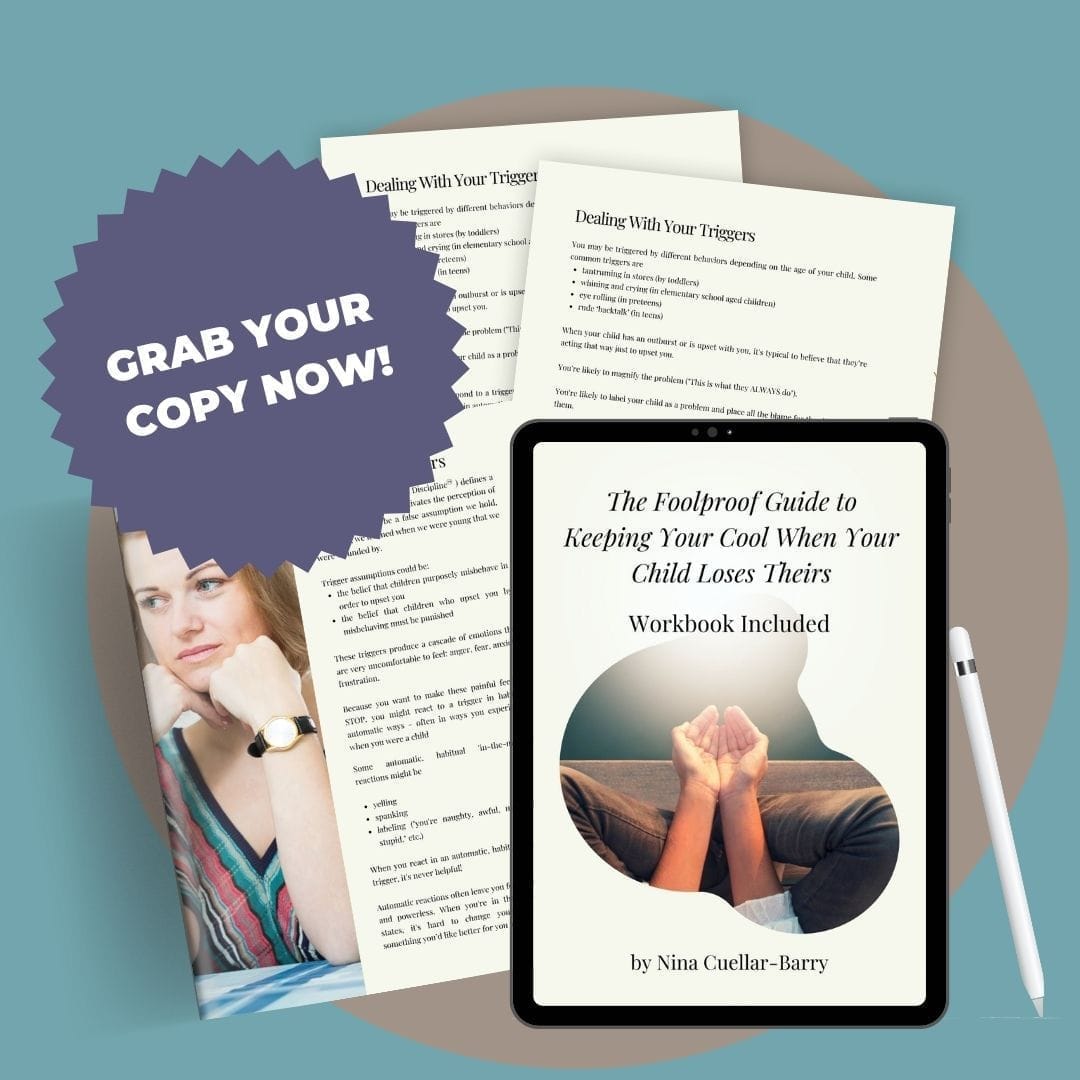
Would you like to stay calm in the face of your child's tantrum?
I've developed The Foolproof Guide to Keeping Your Cool When Your Child Loses Theirs to help loving parents handle stressful situations with calm and confidence.
Click the button below to learn more about this free tool.
FOLLOW ME:

